



Haze can make the sky look cloudy or smoky, but it is more than just a visibility concern. Haze contains fine particles from smoke, dust, and ash that can affect the eyes, nose, throat, lungs, and overall health.
As haze continues to affect some parts of the Philippines due to smoke from forest and peatland fires in Indonesia, it is important for everyone to take simple precautions and stay updated on air quality conditions.
What Is Haze?
Haze is polluted air containing tiny particles and pollutants that can remain suspended in the atmosphere. During the current situation, smoke from fires in Indonesia has been transported toward parts of the Philippines by prevailing winds, including the southwest monsoon or Habagat.
Exposure to haze may cause coughing, throat irritation, watery or irritated eyes, difficulty breathing, and chest discomfort. It may also worsen existing respiratory conditions.
What Should You Do When There Is Haze?
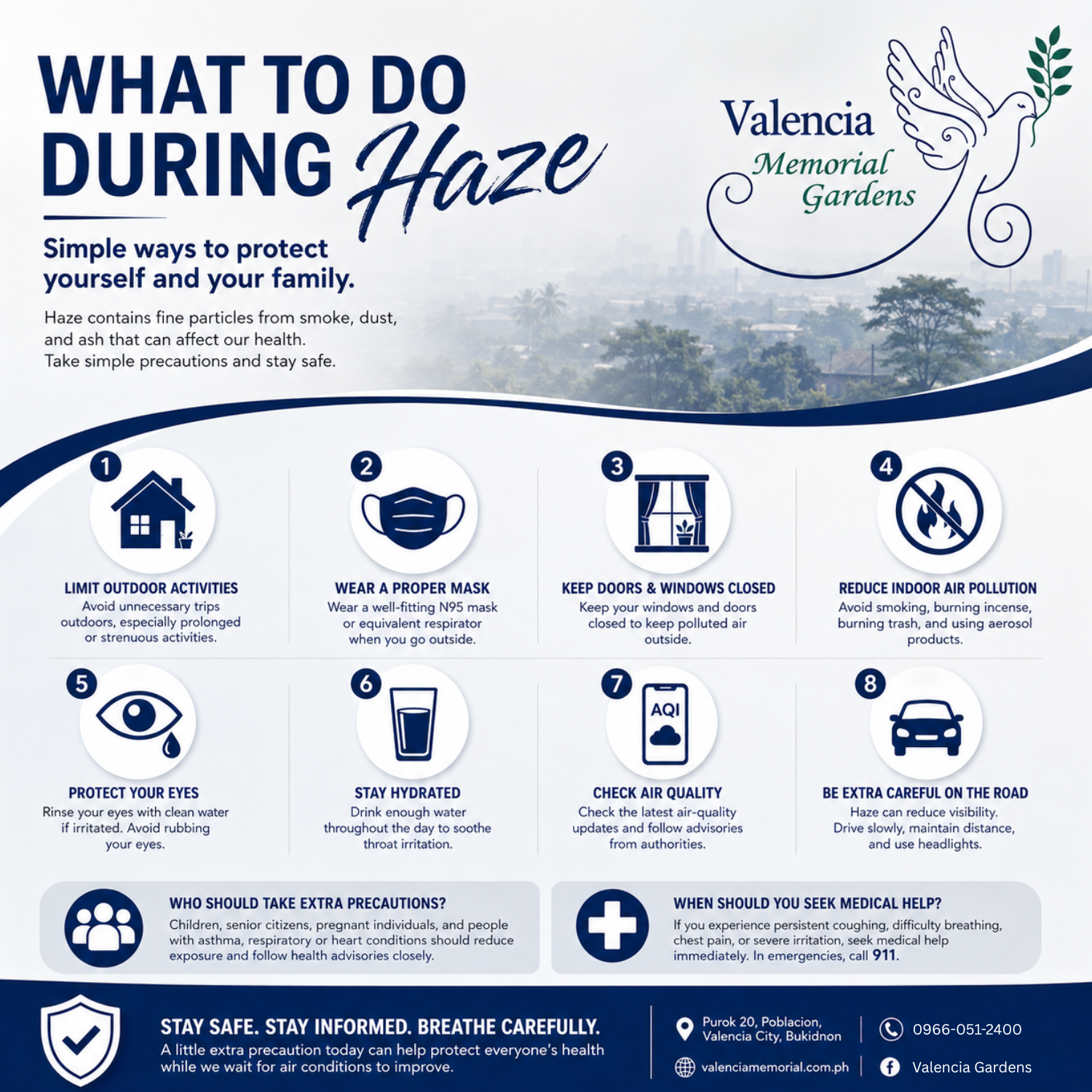
1. Limit Outdoor Activities
Avoid unnecessary trips outdoors, especially prolonged or strenuous activities such as running, exercising, or outdoor physical work.
If the air quality in your area is poor, consider postponing outdoor activities until conditions improve. This is particularly important for children, older adults, and people who are more sensitive to air pollution.
2. Wear a Proper Mask Outdoors
If you need to go outside while haze is present, wear a well-fitting N95 mask or equivalent respirator. These masks can help reduce the amount of fine particles you breathe in.
Make sure the mask fits properly around your nose and mouth for better protection.
3. Keep Doors and Windows Closed
When outdoor air quality is poor, keep your windows and exterior doors closed as much as practical to reduce the amount of polluted air entering your home or workplace.
If you use air-conditioning, recirculating indoor air instead of bringing in outside air can help reduce exposure.
4. Reduce Indoor Air Pollution
Haze is not the only source of airborne particles. While keeping outdoor air out, also avoid activities that can create additional indoor pollution, such as smoking, burning incense, burning trash, and unnecessary use of aerosol products.
Keeping indoor air as clean as possible can provide a safer environment during periods of poor outdoor air quality.
5. Protect Your Eyes
Haze can cause eye irritation, redness, and excessive tearing.
If your eyes become irritated, rinse them gently with clean water or saline solution. Avoid rubbing your eyes, especially when you have been outdoors.
6. Stay Hydrated
Drink enough water throughout the day. Staying hydrated can help soothe throat irritation associated with exposure to polluted air.
7. Check the Air Quality Before Going Outside
Don’t rely only on how the sky looks or how strong the smell of smoke is. Check the latest air-quality information and follow advisories from the Department of Environment and Natural Resources – Environmental Management Bureau (DENR-EMB), local government units, and health authorities.
Air quality can change depending on wind, rain, and other weather conditions.
8. Be Extra Careful on the Road
Haze can reduce visibility, making driving more difficult.
If visibility is poor, drive more slowly, maintain a safe distance from other vehicles, and use your headlights as appropriate. Avoid unnecessary travel when conditions are particularly poor.
Who Should Take Extra Precautions?
Everyone can be affected by poor air quality, but additional care is recommended for:
- Children
- Senior citizens
- Pregnant individuals
- People with asthma or other respiratory conditions
- People with heart or cardiovascular conditions
- Individuals who are particularly sensitive to air pollution
These groups should reduce exposure and follow health advisories closely.
When Should You Seek Medical Help?
Pay attention to symptoms such as persistent coughing, difficulty breathing, chest pain, or significant irritation of the eyes or respiratory tract.
If symptoms are severe or you are experiencing a medical emergency, seek immediate medical assistance. In the Philippines, the National Emergency Hotline is 911.
Stay Safe, Stay Informed
Haze may be temporary, but taking precautions while it is present can help reduce unnecessary exposure to polluted air. Limit outdoor activities, wear appropriate protection when going outside, keep indoor spaces protected, and monitor official air-quality advisories.
Most importantly, look after yourself and your loved ones. A little extra precaution today can help protect everyone’s health while we wait for air conditions to improve.
Stay safe, stay informed, and breathe carefully.