



What Is an Earthquake?
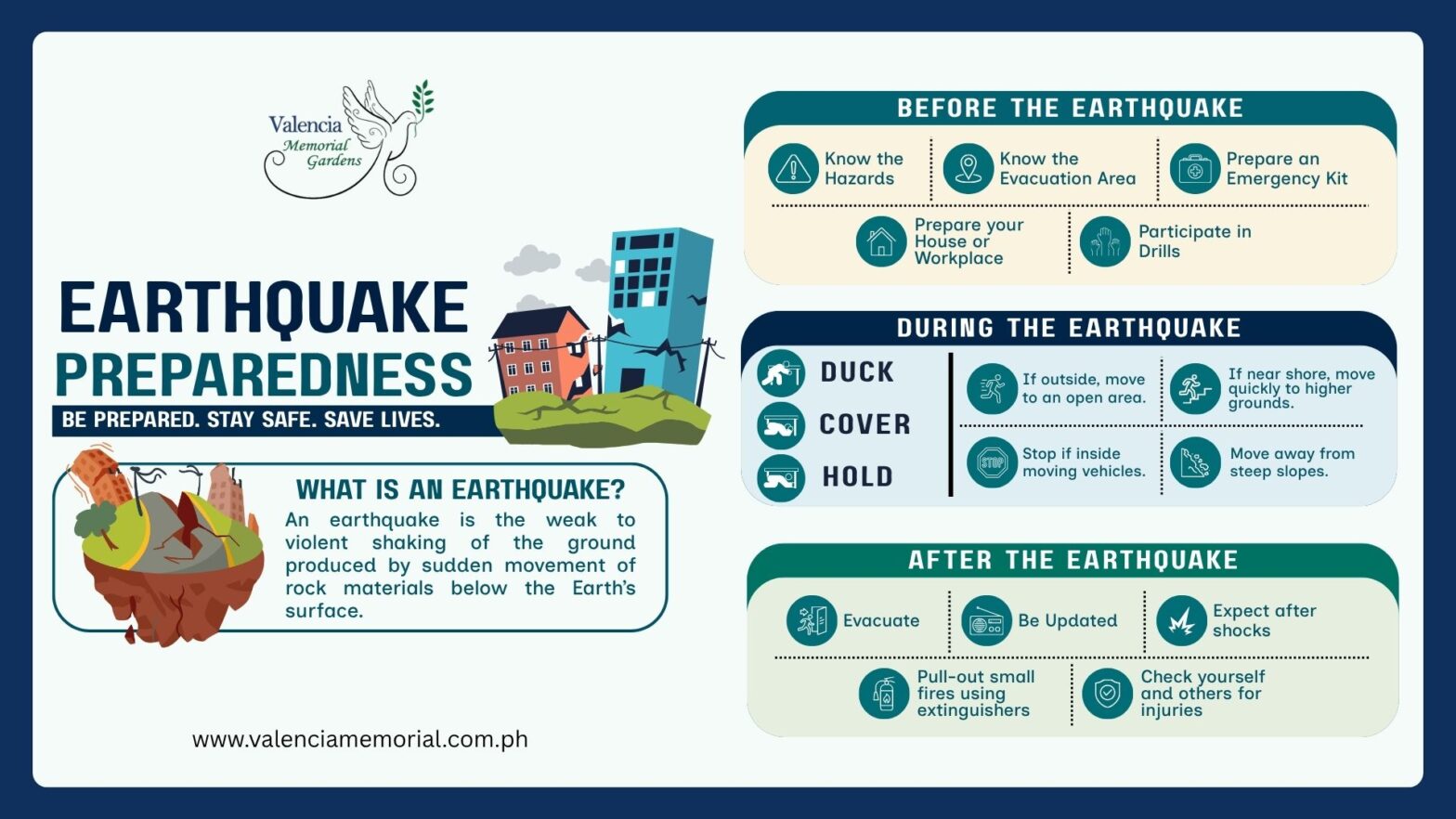
An earthquake is the shaking of the ground caused by the sudden movement of rock materials beneath the Earth’s surface. These movements release energy that travels through the ground, causing vibrations that can range from mild tremors to powerful shaking capable of damaging buildings and infrastructure.
Being informed and prepared can make a significant difference when an earthquake strikes.
Before an Earthquake: Prepare Ahead
Preparedness begins long before the ground starts shaking. Taking preventive measures can help reduce risks and improve your ability to respond during an emergency.
1. Know the Hazards
Learn about earthquake-prone areas in your community and identify potential hazards in your home, workplace, or school.
2. Know the Evacuation Areas
Familiarize yourself with designated evacuation centers and safe open spaces where you can gather after an earthquake.
3. Prepare an Emergency Kit
Keep an emergency kit containing:
- Drinking water
- Non-perishable food
- Flashlight and batteries
- First-aid supplies
- Important documents
- Portable radio
- Necessary medications
4. Secure Your Home and Workplace
Fasten heavy furniture, secure shelves, and inspect structures for potential weaknesses. Ensure that everyone knows emergency exits and safety procedures.
5. Participate in Earthquake Drills
Regular drills help individuals react quickly and calmly during an actual earthquake. Practicing safety procedures can save lives.
During an Earthquake: Stay Calm and Protect Yourself
When an earthquake occurs, remember the basic safety rule:
Duck, Cover, and Hold
- Duck – Get down on your hands and knees to prevent being knocked over.
- Cover – Take shelter under a sturdy table or desk and protect your head and neck.
- Hold – Hold on to your shelter until the shaking stops.
Additional Safety Reminders
- If you are outdoors, move to an open area away from buildings, trees, utility poles, and power lines.
- If you are near the coast, move quickly to higher ground after the shaking stops due to possible tsunami risks.
- If driving, stop safely and remain inside your vehicle until the shaking ends.
- Stay away from steep slopes and areas prone to landslides.
After an Earthquake: Remain Alert
The danger does not always end when the shaking stops. Aftershocks may occur minutes, hours, or even days later.
1. Evacuate Safely
Move to a safe location if your building has sustained damage.
2. Stay Updated
Listen to official announcements from local authorities and emergency agencies for updates and instructions.
3. Expect Aftershocks
Be prepared for additional shaking and continue to observe safety precautions.
4. Check for Fires and Hazards
If it is safe to do so, extinguish small fires and check for gas leaks, damaged electrical wiring, and other hazards.
5. Check for Injuries
Assess yourself and those around you for injuries. Provide first aid if trained and seek medical assistance when necessary.
Preparedness Saves Lives
Earthquakes may be unpredictable, but preparation is within our control. By understanding the risks, participating in drills, preparing emergency supplies, and knowing the proper response during and after an earthquake, we can protect ourselves and help others stay safe.
Preparedness is not just about reacting to disasters—it is about building resilience and peace of mind. Stay informed, stay ready, and remember: being prepared today can save lives tomorrow.
Be Prepared. Stay Safe. Save Lives.