


Ownership rules, maintenance fees, transfer processes, and more
Planning ahead—whether for yourself or your loved ones—includes understanding the policies of the memorial park where you intend to purchase a lot. These policies ensure order, fairness, and long-term maintenance of the property. Before making any commitment, it’s important to know what you’re agreeing to. Here’s a helpful guide to the key policies you should be aware of.
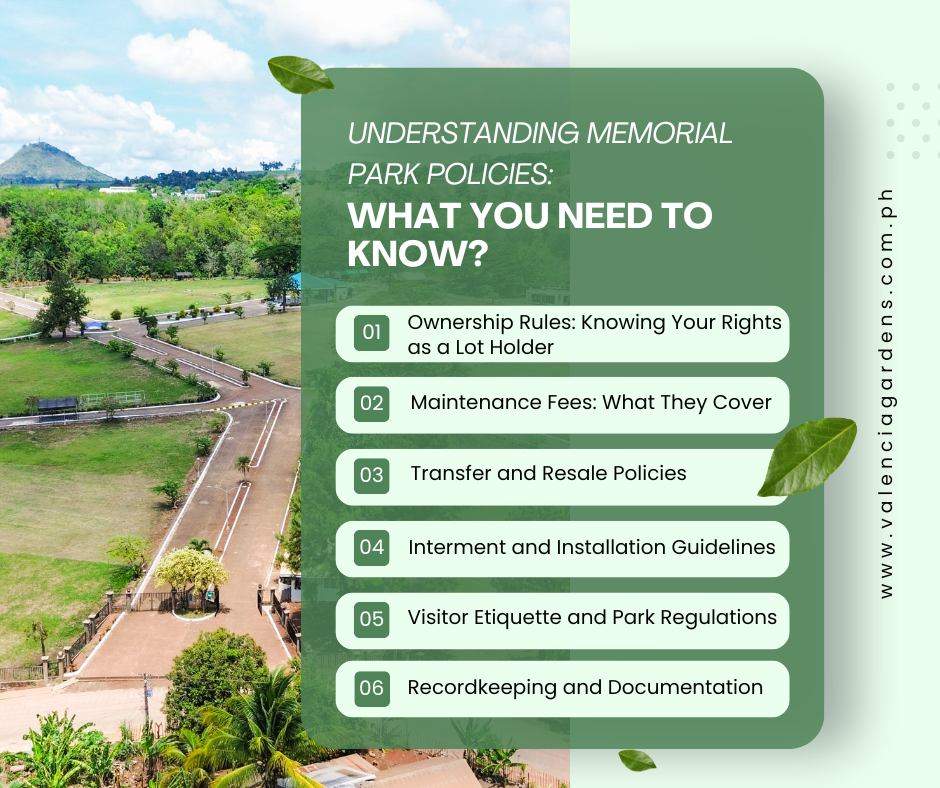
1. Ownership Rules: Knowing Your Rights as a Lot Holder
When you purchase a memorial lot, you are typically granted perpetual use rights, not full land ownership. This means:
-
You have the right to use the lot for burial or interment.
-
You cannot use the lot for any purpose other than what the park allows.
-
Some parks have limits on how many individuals can be interred in one lot.
-
The memorial park management still exercises authority for maintenance, safety, and compliance purposes.
Always read the Purchase Agreement or Policies & Guidelines to understand the scope of your rights.
2. Maintenance Fees: What They Cover
Most private memorial parks charge annual care or perpetual maintenance fees, while some now offer lifetime maintenance care for free. These fees fund:
-
Grass-cutting and landscaping
-
Road, drainage, and pathway upkeep
-
Lighting, security, and cleanliness
-
General beautification of the park
Failure to pay these fees may result in penalties or restrictions on services, so it’s important to keep your payments up to date.
3. Transfer and Resale Policies
Need to transfer or sell your memorial lot? Policies vary, but commonly include:
-
Submission of a transfer request form
-
Participation of both seller and buyer for verification
-
Payment of transfer fees to update records
-
Approval from the memorial park to make the transfer official
Some parks also require notarized documents and impose limits on resale pricing to avoid speculation.
4. Interment and Installation Guidelines
Memorial parks enforce guidelines to maintain uniformity, safety, and order. These may include rules on:
-
Scheduling burials (usually with notice 3 days prior)
-
Specifications for markers, tombstones, and lapida
-
Height and size limitations for family estates or mausoleums
-
Allowed materials for construction
Unauthorized structures or modifications are often subject to removal.
5. Visitor Etiquette and Park Regulations
To keep the park peaceful and respectful, visitors are expected to follow:
-
Visiting hours
-
Rules against loud music, vandalism, or littering
-
Parking guidelines
-
Restrictions on alcohol, firecrackers, or feeding animals
These policies ensure the park remains serene and safe for all families.
6. Recordkeeping and Documentation
Always keep copies of:
-
Lot certificate / deed of perpetual use
-
Official receipts
-
Maintenance fee records
-
Transfer documents (if applicable)
These documents are crucial for verifying ownership or processing future services.
Understanding memorial park policies gives you clarity, security, and peace of mind. Whether you’re choosing a lot today or planning for the future, knowing the rules helps protect your investment and ensures your loved ones experience a smooth and respectful process.